
BendixKing KT-76A Transponder
BendixKing KT-76A Transponder: A Proven Workhorse in General Aviation
Feb
BendixKing KT-76A Transponder: A Proven Workhorse in General Aviation
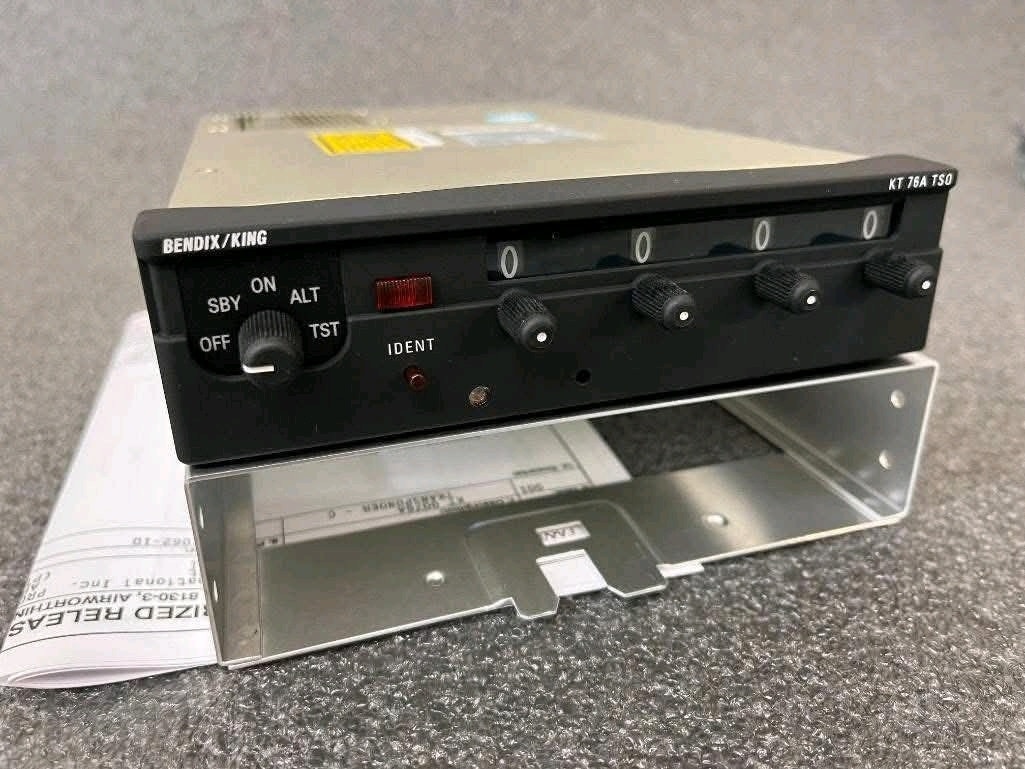
BendixKing KT-76A Transponder. The BendixKing KT-76A is one of the most recognized and widely installed Mode C transponders in general aviation history. For decades, this compact and dependable unit has helped pilots comply with airspace regulations while maintaining reliable communication with air traffic control radar systems. Even in today’s glass-cockpit era filled with ADS-B technology and advanced avionics suites, the KT-76A continues to hold its place in thousands of aircraft panels around the world. BendixKing KT-76A Transponder | Buy Aviation Parts Online
Whether you operate a flight school trainer, a privately owned single-engine airplane, or a light twin, chances are you’ve either flown behind a KT-76A or considered installing one. Its durability, straightforward interface, and trusted performance have made it a staple in aviation for years.
In this article, we’ll explore the design, features, operation, installation considerations, regulatory role, advantages, limitations, and continued relevance of the BendixKing KT-76A transponder. BendixKing KT-76A Transponder | Buy Aviation Parts Online
BendixKing KT-76A Transponder
Overview of the BendixKing KT-76A
The KT-76A is a panel-mounted Mode A/C ATC transponder designed to respond to interrogations from secondary surveillance radar (SSR) systems. Developed by BendixKing, a long-standing avionics manufacturer with a reputation for reliability, the unit became a standard installation in many certified aircraft throughout the 1980s and 1990s.
Operating on 1090 MHz for replies and receiving interrogations at 1030 MHz, the KT-76A transmits:
- A four-digit squawk code (Mode A)
- Encoded altitude information (Mode C) when connected to an approved altitude encoder
The unit fits into a standard avionics rack and is known for its straightforward analog-digital hybrid design. It is not overloaded with features, which is part of its appeal. It does one job, and it does it well.
BendixKing KT-76A Transponder
Understanding Mode A and Mode C
To appreciate the KT-76A’s role, it helps to understand the two core modes it supports.
Mode A transmits the aircraft’s selected four-digit identification code, commonly referred to as the “squawk” code. This allows air traffic controllers to identify an aircraft on radar.
Mode C adds pressure altitude reporting to the transmission. When connected to a blind encoder or encoding altimeter, the KT-76A transmits altitude data in 100-foot increments. This altitude appears on ATC radar displays and supports vertical separation between aircraft.
While newer systems offer Mode S and ADS-B capabilities, Mode A/C transponders like the KT-76A remain functional in many airspace environments, provided they meet regulatory requirements.
BendixKing KT-76A Transponder
Key Features of the KT-76A
The KT-76A may not be flashy, but its feature set is purpose-built and dependable.
Four-Digit Code Selection
The front panel allows pilots to enter the squawk code using four selector knobs. The mechanical feel provides positive feedback, reducing accidental misentries.
Reply Indicator Light
A “Reply” light illuminates when the unit responds to an interrogation from ATC radar. This gives pilots immediate visual confirmation that the system is functioning.
IDENT Button
Pressing the IDENT button enhances the radar return for a short duration, allowing controllers to quickly identify the aircraft among other targets.
Altitude Reporting Capability
When paired with an altitude encoder, the unit transmits pressure altitude automatically under Mode C operation.
Compact Form Factor
The KT-76A fits into a standard 6.25-inch wide rack, making it compatible with most legacy avionics stacks.
Rugged Internal Design
Known for its durability, the KT-76A withstands vibration, temperature variation, and long operating cycles typical in training environments.
BendixKing KT-76A Transponder
Cockpit Operation and Pilot Interaction
Operating the KT-76A is refreshingly simple. The front panel contains:
- Four code selection knobs
- A function selector switch (OFF, STBY, ON, ALT)
- IDENT button
- Reply light indicator
Before taxi, pilots typically set the assigned squawk code and place the transponder in standby mode. Once ready for departure, switching to ALT activates altitude reporting. The process is intuitive and requires minimal workload.
Because of its simplicity, the KT-76A is especially popular in training aircraft. Student pilots can quickly understand its operation without navigating complex menus or digital interfaces.
BendixKing KT-76A Transponder
Installation Considerations
Installing a KT-76A involves more than sliding it into the panel. Several components are required for proper operation:
Altitude Encoder
To transmit Mode C altitude data, the unit must be connected to an approved blind encoder or encoding altimeter.
Antenna System
A properly installed transponder antenna is essential for effective signal transmission. Poor antenna installation can lead to weak replies or failed inspections.
Wiring and Circuit Protection
Proper wiring and dedicated circuit protection ensure reliable performance and compliance with certification standards.
Certification and Logbook Entry
As with any avionics installation in certified aircraft, installation must comply with FAA regulations or applicable authority standards and include proper documentation.
The KT-76A’s popularity means many aircraft already have compatible trays and wiring in place, simplifying replacement or refurbishment.
BendixKing KT-76A Transponder
Regulatory Role and Airspace Compliance
For many years, Mode C transponders like the KT-76A were required in:
- Class A airspace
- Class B airspace
- Class C airspace
- Above 10,000 feet MSL (with certain exceptions)
While ADS-B Out requirements have changed the regulatory landscape in some regions, the KT-76A can still serve as part of a compliant system when paired with an approved ADS-B solution.
In many aircraft, the KT-76A feeds altitude and squawk data to an external ADS-B Out transmitter. This allows owners to retain the trusted unit while meeting modern compliance standards.
BendixKing KT-76A Transponder
Durability and Longevity
One reason the KT-76A remains common today is its robust construction. BendixKing engineered the unit during a time when avionics were built with heavy-duty components designed for long-term reliability.
Flight schools often report thousands of hours of service with minimal issues beyond routine inspections and occasional bench testing.
The mechanical selector knobs and straightforward circuitry reduce complexity, which in turn reduces potential failure points.
Many units remain in service decades after initial installation, a testament to the design philosophy behind the KT-76A.
BendixKing KT-76A Transponder
Advantages of the KT-76A
Proven Reliability
The KT-76A has earned trust over decades of operation.
Simplicity
The straightforward interface reduces pilot workload and training time.
Cost-Effectiveness
On the used market, refurbished units are often more affordable than modern digital replacements.
Compatibility
The unit integrates easily with many legacy avionics systems.
Maintenance Familiarity
Avionics shops are well-acquainted with troubleshooting and servicing the KT-76A.
Limitations in Modern Aviation
Despite its strengths, the KT-76A does have limitations.
No Mode S Capability
The unit does not support Mode S interrogation or extended squitter functions.
No Built-In ADS-B
It cannot independently meet ADS-B Out requirements without additional equipment.
Analog Interface
Compared to modern digital transponders, the KT-76A lacks advanced diagnostics and display features.
Weight and Power Consumption
Newer solid-state units may be lighter and more power-efficient.
For aircraft owners seeking full integration with glass panels or traffic systems, upgrading to a modern solution may offer added benefits.
Maintenance and Inspection Requirements
Transponders must undergo periodic inspections in accordance with regulations, typically every 24 months in the United States under FAR 91.413.
These inspections verify:
- Frequency accuracy
- Output power
- Reply sensitivity
- Altitude reporting accuracy
The KT-76A generally performs well during these checks when properly maintained. Common service actions may include cleaning connectors, recalibrating components, or replacing aging internal parts.
Given its long service life, some units may require more frequent maintenance as components age.
The KT-76A in Training Aircraft
Flight schools frequently rely on the KT-76A because of its reliability and ease of use. Student pilots benefit from:
- Clear knob-based squawk entry
- Simple mode selection
- Immediate reply light feedback
Instructors appreciate that the system rarely becomes a distraction during training flights. It performs its function quietly in the background, allowing students to focus on navigation, communication, and aircraft control.
In high-cycle environments where aircraft operate multiple flights daily, durability becomes essential. The KT-76A has proven capable of handling that workload.
Integration with Modern ADS-B Solutions
With the advent of ADS-B mandates, many aircraft owners faced a decision: replace the entire transponder or integrate with existing equipment.
In numerous installations, the KT-76A serves as the transponder component feeding data to a separate ADS-B Out system. This hybrid approach allows operators to:
- Preserve panel layout
- Reduce installation costs
- Maintain familiar operation
While not the most technologically advanced path, it offers a practical solution for many legacy aircraft.
Market Availability and Support
Although no longer in production, the KT-76A remains widely available through:
- Refurbished avionics dealers
- Overhaul facilities
- Aircraft salvage suppliers
Support documentation, installation manuals, and maintenance guidance are readily accessible. Many avionics technicians continue to support the platform, ensuring parts and expertise remain obtainable.
When purchasing a used unit, buyers should verify service history, bench test results, and compliance status.
Why the KT-76A Still Matters
Aviation is an industry that values proven reliability. While innovation drives progress, dependable legacy systems often remain in service long after newer models appear.
The BendixKing KT-76A embodies that philosophy. It represents a generation of avionics built with durability and simplicity at the forefront.
For aircraft owners operating in airspace where Mode C remains acceptable or integrated with ADS-B solutions, the KT-76A continues to offer dependable service.
It may not feature touchscreens or digital menus, but it performs its core mission consistently: ensuring that air traffic control can identify and separate aircraft safely.
Final Thoughts
The BendixKing KT-76A transponder has earned its place as one of the most trusted Mode C units in general aviation history. Its straightforward operation, long-term durability, and widespread adoption have cemented its legacy in cockpits around the world.
While modern avionics continue to evolve with ADS-B, Mode S, and integrated digital systems, the KT-76A remains a testament to functional design and engineering longevity.
For many aircraft owners, it strikes a balance between compliance, cost, and reliability. And in aviation, reliability is everything.
If you operate an aircraft equipped with a KT-76A, you’re flying with a piece of avionics history that continues to serve pilots faithfully—flight after flight.


https://addlinks.pro/tpyd6